The Verification Process
Every formulation in the Sarulone catalogue passes through a structured, documented process before receiving an active entry status. This page details each stage of that process — from ingredient research to independent batch verification and ongoing archive review.
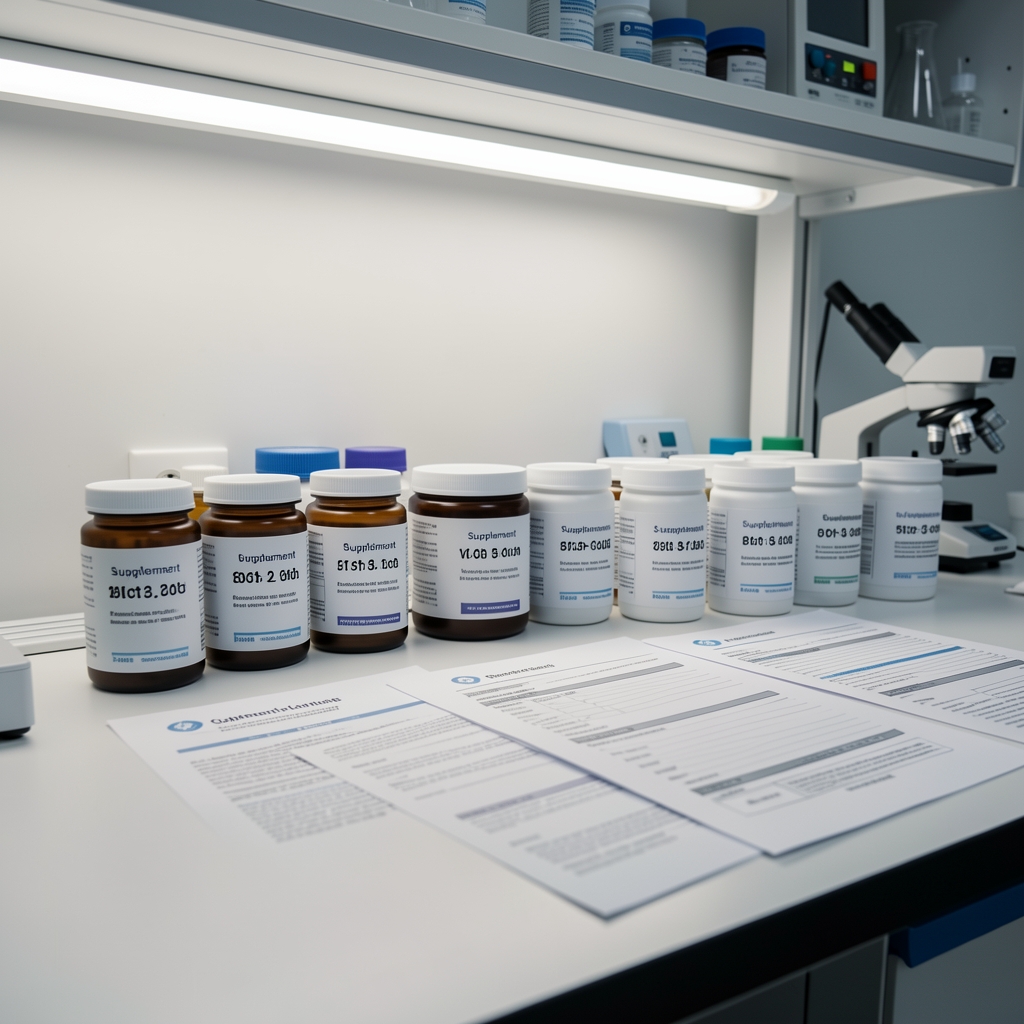
Published Research Review
A proposed ingredient enters the archive process with a minimum of three peer-reviewed nutritional research references. The Sarulone research team assesses the quality and recency of the published evidence, checking for established documented roles in energy metabolism, mineral balance, immune function, or active-lifestyle support. References must originate from journals indexed in recognised nutritional science databases.

Supplier Identification and Assessment
Once an ingredient is approved on research grounds, the sourcing team identifies candidate suppliers. Assessment criteria include geographic origin documentation, facility-level food-grade processing standards, traceability from field to extraction, and the supplier's ability to provide ingredient-specific documentation on request. A minimum of two candidate suppliers are assessed per ingredient.

Chain-of-Custody Documentation
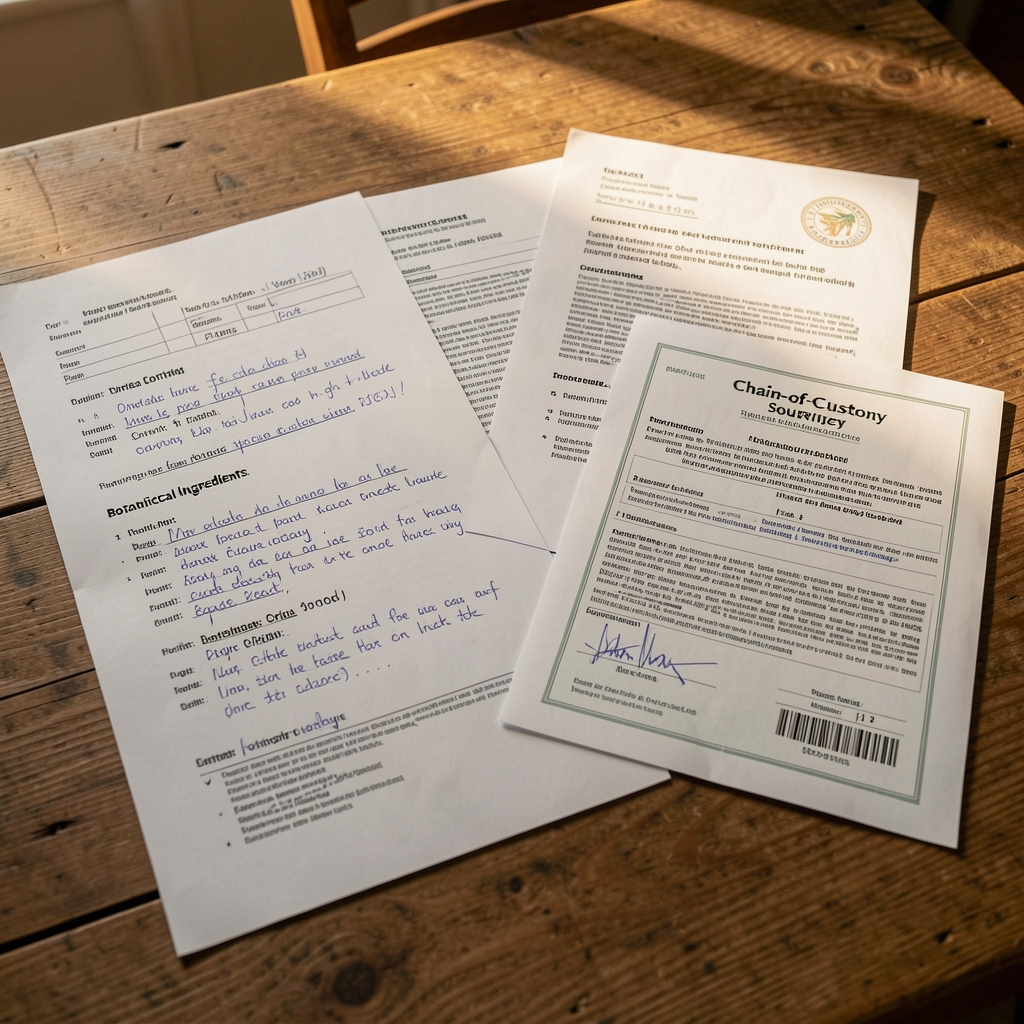
Active ingredients are sourced from documented suppliers, with each batch accompanied by a certificate of composition. The sourcing record tracks the full journey from origin to serving — covering the supplier's extraction or processing method, transport chain, and point of delivery. For plant-derived ingredients, origin country and growing-season documentation is retained. Archive ID codes are assigned at this stage.
Formulation Composition Review
Individual ingredients are assessed for composition compatibility before being combined into a formulation entry. This stage examines how mineral compounds interact within a daily serving context, whether whole-food sourced and extracted forms are appropriately distinguished in the entry, and whether the serving format — soft-gel, powder, or liquid — is suited to the ingredient's stability profile. The editorial team produces the initial formulation entry at this stage, subject to amendment after verification results.

Independent Batch Verification
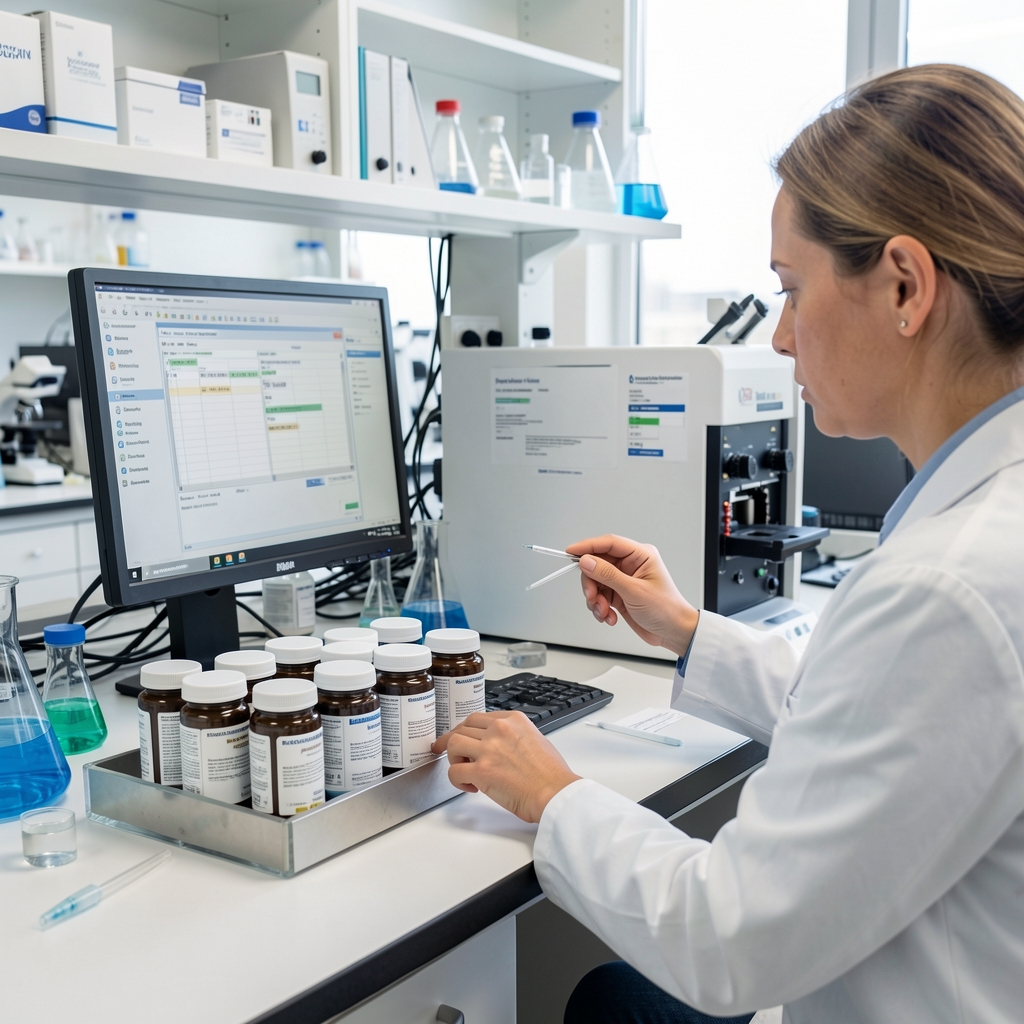
Each batch of a listed formulation is sent to an independent UK analytical laboratory for elemental analysis and labelling accuracy verification. The laboratory tests for active ingredient concentration, absence of undisclosed compounds, and whether the labelled serving content matches the analysed content. Results are returned as a formal certificate of composition. Archive entries carry a verification status — Active, Under Review, or Suspended — updated at each batch cycle.
Editorial Review and Archive Induction
With verification complete, the editorial team finalises the archive entry. This includes cross-checking the formulation description against verified data, assigning the archive ID, setting the verification expiry date, and publishing the entry with an active status. Entries are reviewed at each subsequent batch cycle. Sourcing changes, new research, or failed verification trigger an immediate review. The editorial record is retained and internally dated.

How Sourcing Partners Are Assessed
Sourcing prioritises suppliers whose facilities maintain food-grade processing standards. The assessment does not involve on-site inspection by the Sarulone team — instead, it relies on documentary evidence provided by the supplier and confirmed by independent analysis of the resulting batches.
Suppliers are assessed on a rolling annual basis. If a batch result raises a question about consistency with previous batches, the supplier enters a formal documentary review. During this period, the affected formulation entry is suspended from active status.
Geographic Origin Disclosure
The supplier must document the country of origin for each ingredient. For plant-derived compounds, the growing region and harvest season must be identified. This information is reflected in the formulation entry sourcing notes.
Food-Grade Processing Confirmation
Processing facilities must demonstrate compliance with applicable food-grade standards. Supplier documentary evidence is reviewed and retained in the Sarulone supplier file. Updated documentation is requested at each annual review cycle.
Batch-Level Traceability
Each batch must be traceable from the point of extraction or processing to the point of delivery. Batch codes are cross-referenced with the independent laboratory verification records. Traceability gaps result in an entry review.
Certificate of Composition Issuance
The supplier must be able to produce a certificate of composition for each batch on request. This is a pre-condition for any supplier entering the Sarulone sourcing network, and failure to provide updated certificates triggers a sourcing review.
Absence of Undisclosed Compounds
Independent laboratory analysis must confirm the absence of undisclosed active compounds in each batch. Any detected undisclosed compound results in immediate supplier suspension and formulation entry suspension, pending full documentary review.
How Published Research Informs the Archive
Ingredient profiles in Sarulone formulations are selected based on published nutritional research and undergo independent batch verification for quality and labelling accuracy. The research review draws on peer-reviewed literature from recognised nutritional science and food supplement journals. The archive does not present research findings as original scientific claims — it documents the established nutritional roles recognised in indexed published sources.
The editorial team distinguishes between established, well-documented nutritional roles — such as zinc contributing to normal immune function, or magnesium contributing to normal energy metabolism — and emerging or contested research areas. Only established roles form the basis of formulation descriptions. Contested or emerging findings are noted separately and are not used as the primary basis for including an ingredient in the active index.
Research references are reviewed at each quarterly archive update. If a key reference is retracted, significantly revised, or contradicted by subsequent systematic evidence, the affected formulation entry is flagged for editorial review. The research basis for each ingredient is documented internally and available on request to qualified nutrition professionals.
Sarulone is an independent wellness resource focused on everyday nutrition and active lifestyle practices for men. The content is not affiliated with any governmental or institutional body. We recommend speaking with a qualified wellness or nutrition professional before introducing any supplement to your daily routine, particularly if you have specific dietary requirements.
Research Review
All research references checked for currency. New published research assessed for relevance to active formulation entries. Entry descriptions updated where established nutritional roles have been further documented in the literature.
Sourcing Audit
All active supplier documentation reviewed. Updated facility evidence requested from each partner. Chain-of-custody records cross-checked against archive IDs. Sourcing notes in affected entries updated.
Batch Verification Cycle
Current batch samples submitted to independent UK laboratory for elemental analysis. Certificates of composition returned and filed under archive batch records. Entry verification status updated on receipt of results.
Full Editorial Review
Annual review of the complete active formulation index. New candidate ingredients assessed for inclusion in the next cycle. Archive revision numbers updated. Methodology documentation revised where standards have changed.
The Boundaries of This Catalogue
The Sarulone archive covers food supplement formulations with documented nutritional roles relevant to men's daily active lifestyle. The specific focus areas are: mineral complexes supporting energy metabolism and normal bodily function, adaptogen blend compositions with published research backing, and whole-food sourced plant-based formulations relevant to lean body support and daily wellbeing.
The archive does not cover: supplement-grade compounds of any category, formulations whose primary research basis relates to specific wellness challenges outside the catalogue scope, compounds without independent batch verification, or ingredients lacking documented sourcing records. These exclusions are not value judgements on those categories — they define the editorial scope of this particular resource.
Mineral complexes — zinc, magnesium, selenium, iron, potassium
Within scope. Established nutritional roles documented in published sources.
Adaptogen blends — ashwagandha, rhodiola, ginseng, eleuthero
Within scope. Published research reviewed for each entry. Chain-of-custody required.
Vitamins — B12, D3, C, CoQ10 — sourced from documented pathways
Within scope. Whole-food extraction pathways preferred where composition permits.
Supplement-grade compounds — any category
Outside archive scope. Not assessed or listed.
Compounds without independent verification certificates
Outside archive scope. No entry without current batch certification.